France

Château Croix Mouton

➔ ABOUT THE PRODUCER

Château Croix-Mouton sits on a bend of the Dordogne in Lugon-et-l’Île-du-Carney, at the edge of the Fronsadais. The estate covers 100 hectares, including woods and a pond, and its 64 hectares of vineyard lie on a single, unbroken plot. Gallo-Roman remains found on the property show that vines have grown here for a very long time. Over the centuries the Dordogne has flooded its banks and left behind layers of silt, building up the alluvial ridge the vines grow on today: deep clay and clay-silt soils, rich in magnesium. The vineyard is about 90% Merlot, with the oldest vines now around 80 years old, and it is farmed under HVE level 3 environmental certification, with grass between the rows.

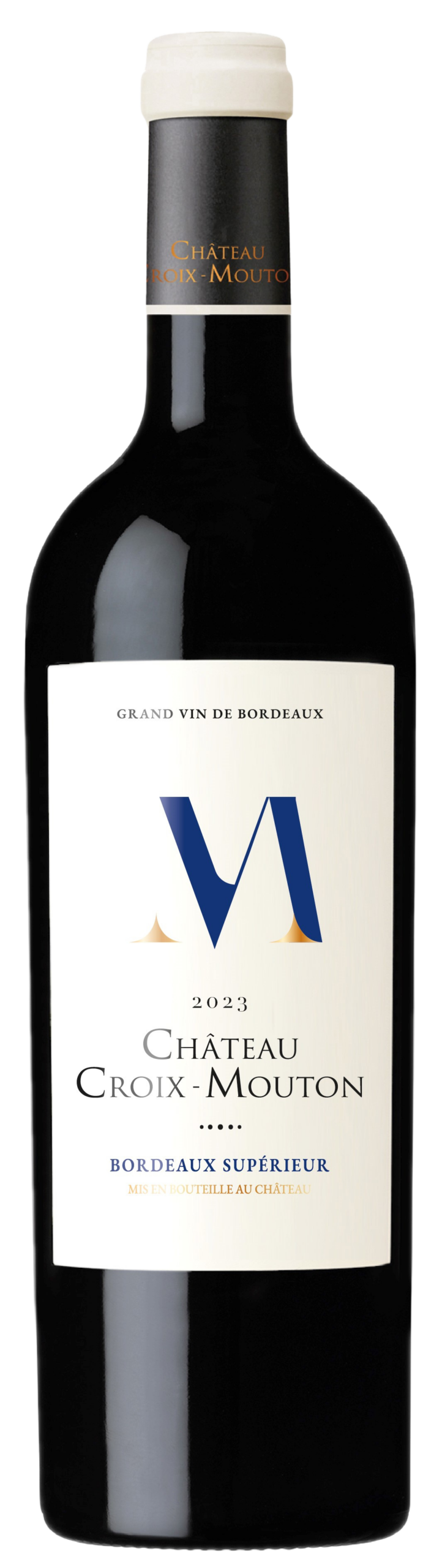
In the 1930s the château’s owner, Doctor Barde, practiced medicine in the neighboring village of Vayres and recommended his own wine to his patients. After his death the estate slowly stopped its production, until Jean-Philippe Janoueix, already an owner in Pomerol and Saint-Émilion, bought it in 1997 with the goal of making it one of the leading wines of its appellation. Today, Maria Deval and Bertrand Ravache carry that work forward, with renowned oenologist Claude Gros advising in the cellar. Since 2022, each vintage’s label carries its own “M,” designed to reflect the weather of that year.
➔ CURRENT WINES

Château Croix Mouton Bordeaux SupérieurView Wine →
TERROIR & VINEYARD

Deep clay and clay-silt soils laid down over centuries by the Dordogne, on an alluvial ridge just above the river. These soils hold water and stay cool, and they're rich in magnesium, which helps the vines take up minerals. Merlot thrives in them, and it makes up 80% of the blend. Cabernet Sauvignon, Cabernet Franc, Malbec and Petit Verdot fill out the rest. The vineyard is farmed under HVE level 3 certification, and yields are kept deliberately low so the fruit reaches full ripeness.

VINIFICATION

At harvest, the grapes pass through a densimetric bath, which sorts them by density so only the ripest, healthiest berries go on to the vats. Extraction is gentle and fermentation temperatures are kept low to preserve the fruit. The wine is drawn off its skins early, before the tannins can harden. Aging is done in barrel.

TASTING NOTES

Deep red with indigo highlights in the glass. The nose leads with mulberry and dark wild berries with cracked pepper and warm spice closely behind. The palate is supple and enveloping, with a core of dark fruit and round, mellow tannins. The finish is long and fresh. Enjoy with roast chicken, a charcoal-grilled steak, or even a stew of sausages and lentils.

RATINGS & REVIEWS

90-91pts ~ James Suckling | 89-91pts ~ Robert Parker

QUICK FACTS

REGION

COUNTRY

APPELLATION

Bordeaux
Bordeaux Supérieur
Saint-Georges-Saint-Émilion
Saint-Émilion Grand Cru
Pomerol